EverBright, solar financing platform
Riding along on the door‑to‑door pitch
How solar reps actually sell, and where the platform got in their way
My role
UX Researcher (ran all field sessions)
Timeline
Feb to Aug 2024
Team
Co-led with lead designer Tracey Morris
Skills
Contextual inquiry, synthesis, product thinking

EverBright, solar financing platform
Riding along on the door‑to‑door pitch
How solar reps actually sell, and where the platform got in their way
My role
UX Researcher (ran all field sessions)
Timeline
Feb to Aug 2024
Team
Co-led with lead designer Tracey Morris
Skills
Contextual inquiry, synthesis, product thinking
3 orgs
3 orgs
Shadowed sales reps in the field across Texas and California, as well as sales manager and internal stakeholder interviews.
14 insights
14 insights
Synthesized in Dovetail, each paired with an opportunity statement that fed the sales-platform roadmap.
2 yr roadmap
2 yr roadmap
Our journey map, personas, and insights became the baseline for a multi-year sales-platform roadmap and several shipped initiatives.
3 orgs
Shadowed sales reps in the field across Texas and California, as well as sales manager and internal stakeholder interviews.
14 insights
Synthesized in Dovetail, each paired with an opportunity statement that fed the sales-platform roadmap.
2 yr roadmap
Our journey map, personas, and insights became the baseline for a multi-year sales-platform roadmap and several shipped initiatives.
Why it matters
The most common way to buy solar scores near the bottom on satisfaction
More than half of homeowners go solar through a door-to-door rep, and that channel scores near the bottom on satisfaction (an NPS of 8 versus 33 for homeowners who do their own research). Reps sit at the center of a 25-year decision, yet no one at EverBright had actually watched how they sell at the kitchen table, meaning that product decisions were riding on assumptions.
How homeowners buy, and how they feel after - NPS survey, N=1,965
Door-to-door
Buyers
51%
NPS
8
Referred by a friend
Buyers
18%
NPS
27
Did their own research
Buyers
10%
NPS
33
The channel most homeowners use is the one that satisfies them least.
Why it matters
The most common way to buy solar scores near the bottom on satisfaction
More than half of homeowners go solar through a door-to-door rep, and that channel scores near the bottom on satisfaction (an NPS of 8 versus 33 for homeowners who do their own research). Reps sit at the center of a 25-year decision, yet no one at EverBright had actually watched how they sell at the kitchen table, meaning that product decisions were riding on assumptions.
How homeowners buy, and how they feel after - NPS survey, N=1,965
Door-to-door
Buyers
51%
NPS
8
Referred by a friend
Buyers
18%
NPS
27
Did their own research
Buyers
10%
NPS
33
The channel most homeowners use is the one that satisfies them least.
Role & research question
What I owned, and what we asked
I ran all of the field research; every ride-along and shadowing session with the sales orgs. Synthesis, the artifacts, and the final readout were co-led with lead designer Tracey Morris. Alongside the fieldwork, we also interviewed internal stakeholders across tech, sales, ops, CX, and marketing.
Research question
How do sales reps actually move a homeowner from a knock to a signature, and where does our platform help or get in the way?
Role & research question
What I owned, and what we asked
I ran all of the field research; every ride-along and shadowing session with the sales orgs. Synthesis, the artifacts, and the final readout were co-led with lead designer Tracey Morris. Alongside the fieldwork, we also interviewed internal stakeholders across tech, sales, ops, CX, and marketing.
Research question
How do sales reps actually move a homeowner from a knock to a signature, and where does our platform help or get in the way?
Approach
Watching the work—not just asking about it
The core method used was contextual inquiry: 3-4 hour ride-alongs where I rode with reps as they canvassed and pitched, so I could see behavior instead of relying on what people say they do. We paired that with foundational interviews, an internal sales-team round-table, stakeholder interviews, and existing NPS data.
Methods
Ride-alongs with reps in the field
12 rep and manager interviews
5 stakeholder interviews
Internal sales round-table
NPS analysis
Participants
Sales reps and management across 3 sales orgs
Internal and third party teams
Texas and California
Constraints we named
Unable to sit in on closing appointments
Only 3 orgs, across 2 states
A baseline for ongoing research rather than a final answer
Approach
Watching the work—not just asking about it
The core method used was contextual inquiry: 3-4 hour ride-alongs where I rode with reps as they canvassed and pitched, so I could see behavior instead of relying on what people say they do. We paired that with foundational interviews, an internal sales-team round-table, stakeholder interviews, and existing NPS data.
Methods
Ride-alongs with reps in the field
12 rep and manager interviews
5 stakeholder interviews
Internal sales round-table
NPS analysis
Participants
Sales reps and management across 3 sales orgs
Internal and third party teams
Texas and California
Constraints we named
Unable to sit in on closing appointments
Only 3 orgs, across 2 states
A baseline for ongoing research rather than a final answer
research process
Process
1
Planned the study around assumptions and gaps
We started from the leadership and product teams' assumptions and named the knowledge gaps the research needed to close via the fieldwork. Objective: understand how and why reps use the platform end to end, to inform the roadmap and the address-to-contract redesign.
2
Rode along in the field
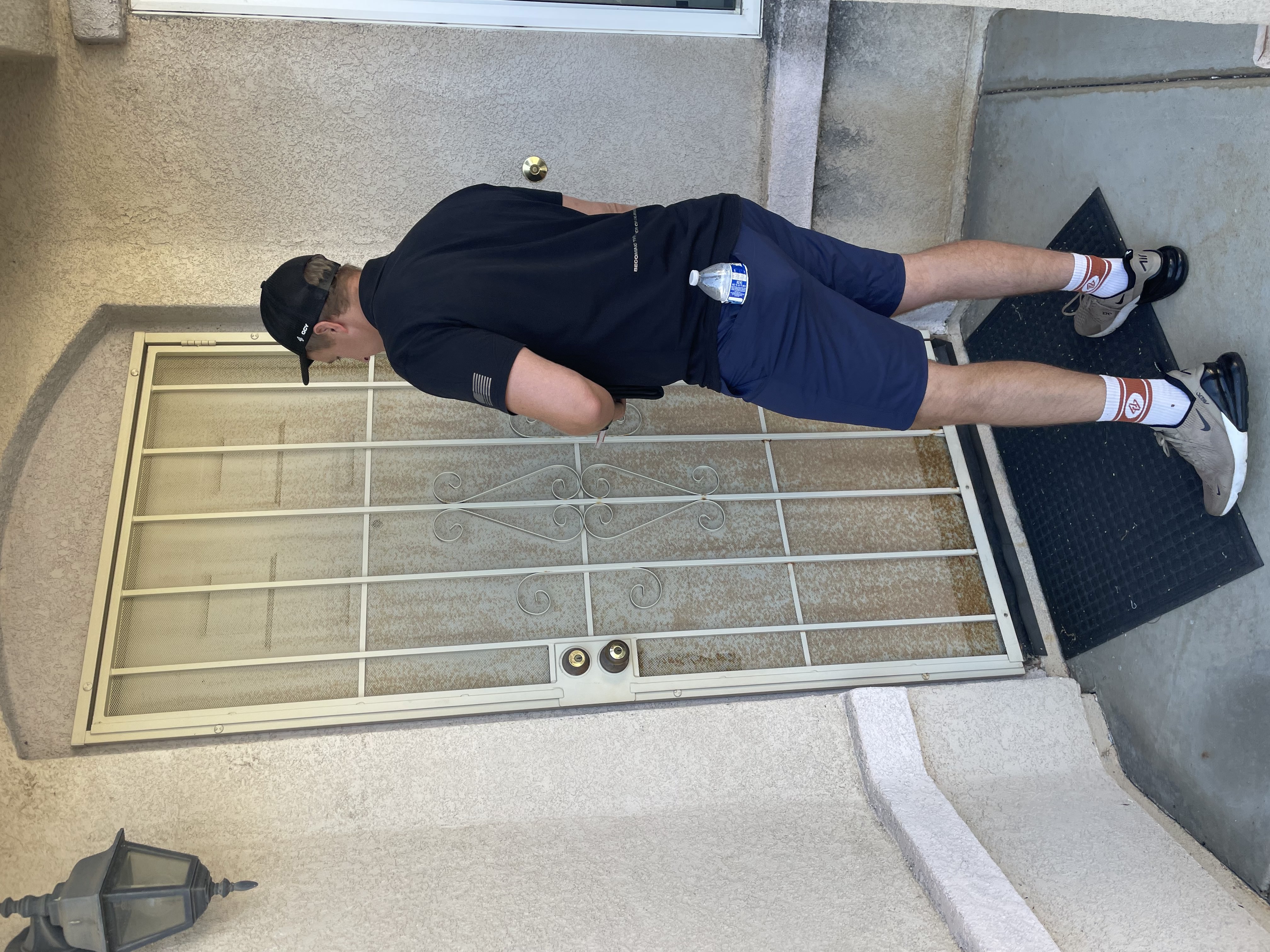
Across three orgs, I shadowed setters and closers through canvassing, pitching, and design. Watching in context surfaced the workarounds and unspoken strategies that interviews alone would have missed, like reps quietly bending usage numbers to make a savings story land. It also became crystal clear that EverBright is one node in a wider tool ecosystem, rather than the whole workflow.


3
Synthesized 14 insights in Dovetail
We coded field notes and interviews, clustered them into themes, and landed 14 insights across the setting and closing stages of the journey. Those distilled into seven how-might-we opportunities, allowing our findings to point directly at design decisions.

The 14 insights, in brief
1. Target low-income neighborhoods for PPA sales
2. Use all canvassing tools at their disposal
3. Present offering as alternative to utility company
4. Setters need to collect utility information
5. Efficiently obtain prequalification status
6. Closer continues narrative of providing salvation from utility
7. Closers set up an interactive environment with homeowners
8. Sales reps manipulate usage data to project savings
9. Closers limit options they share with homeowners
10. Proposal does not facilitate sales rep’s showmanship
11. Contract does not encourage homeowner confidence
12. Homeowners seek reputable brands that they trust
13. EPC adjustments constitute our biggest pain point with sales reps
14. Sales reps fulfill a valuable role as the point of contact for homeowners
4
Built the artifacts: a journey map and two personas
The kitchen table sale runs on a setter-closer model, so we mapped the journey across Setting and Closing with goals, actions, emotions, and pain points, and created two more refined personas for the Setter and the Closer, to make the split legible for product teams.
The Setter
Junior, in training. Knocks, qualifies, and collects info. No platform access.
The Closer
Experienced, paid based on closes. Builds trust, often skips the proposal, and controls information to hold leverage.

5
Turned insights into opportunities
The 14 insights ran the length of the journey, from neighborhood selection to the years after signing. We distilled them into seven opportunities for the platform teams. The one that impacted my work directly: reps bend usage data to sell a better savings story, which became the guardrails question and, later, the Usage Phase rebuild.
How might we…
01 …adapt our offerings with the understanding that sales reps are targeting low-income households?
02 …enhance the canvassing experience, leveraging information we already have access to?
03 …incentivize more ethical and transparent sales?
04 …provide closers with tools that facilitate the showmanship aspect of their job?
05 …provide sales reps with the freedom that keeps them engaged with our product, while also enforcing necessary guardrails?
This one became the Usage Phase rebuild
06 …increase trust in EverBright as a financier?
07 …connect homeowners with the appropriate party to address their needs throughout the lifespan of their contract?
research process
Process
1
Planned the study around assumptions and gaps
We started from the leadership and product teams' assumptions and named the knowledge gaps the research needed to close via the fieldwork. Objective: understand how and why reps use the platform end to end, to inform the roadmap and the address-to-contract redesign.
2
Rode along in the field
Across three orgs, I shadowed setters and closers through canvassing, pitching, and design. Watching in context surfaced the workarounds and unspoken strategies that interviews alone would have missed, like reps quietly bending usage numbers to make a savings story land. It also became crystal clear that EverBright is one node in a wider tool ecosystem, rather than the whole workflow.
3
Synthesized 14 insights in Dovetail
We coded field notes and interviews, clustered them into themes, and landed 14 insights across the setting and closing stages of the journey. Those distilled into seven how-might-we opportunities, allowing our findings to point directly at design decisions.
The 14 insights, in brief
1. Target low-income neighborhoods for PPA sales
2. Use all canvassing tools at their disposal
3. Present offering as alternative to utility company
4. Setters need to collect utility information
5. Efficiently obtain prequalification status
6. Closer continues narrative of providing salvation from utility
7. Closers set up an interactive environment with homeowners
8. Sales reps manipulate usage data to project savings
9. Closers limit options they share with homeowners
10. Proposal does not facilitate sales rep’s showmanship
11. Contract does not encourage homeowner confidence
12. Homeowners seek reputable brands that they trust
13. EPC adjustments constitute our biggest pain point with sales reps
14. Sales reps fulfill a valuable role as the point of contact for homeowners
4
Built the artifacts: a journey map and two personas
The kitchen table sale runs on a setter-closer model, so we mapped the journey across Setting and Closing with goals, actions, emotions, and pain points, and created two more refined personas for the Setter and the Closer, to make the split legible for product teams.
The Setter
Junior, in training. Knocks, qualifies, and collects info. No platform access.
The Closer
Experienced, paid based on closes. Builds trust, often skips the proposal, and controls information to hold leverage.
5
Turned insights into opportunities
The 14 insights ran the length of the journey, from neighborhood selection to the years after signing. We distilled them into seven opportunities for the platform teams. The one that impacted my work directly: reps bend usage data to sell a better savings story, which became the guardrails question and, later, the Usage Phase rebuild.
How might we…
01 …adapt our offerings with the understanding that sales reps are targeting low-income households?
02 …enhance the canvassing experience, leveraging information we already have access to?
03 …incentivize more ethical and transparent sales?
04 …provide closers with tools that facilitate the showmanship aspect of their job?
05 …provide sales reps with the freedom that keeps them engaged with our product, while also enforcing necessary guardrails?
This one became the Usage Phase rebuild
06 …increase trust in EverBright as a financier?
07 …connect homeowners with the appropriate party to address their needs throughout the lifespan of their contract?
Impact
What the research moved
This was the first foundational look at how EverBright’s product is actually used in the field. The journey map, personas, and insights became a shared baseline that design strategy carried to executive leadership to shape a two-to-three year sales-platform roadmap. Several shipped initiatives trace back to it.
Insight → Usage Phase guardrails
The usage-data insight became the guardrail strategy in my own project, which helped bring utility-bill rejections down from 55% to 34%.
Insight → Partner team’s proposal redesign
The finding that reps sell by conversation and leave the proposal unused fed the homeowner proposal redesign: proposal views before signing rose to 87%, completed reviews by 918%.
Impact
What the research moved
This was the first foundational look at how EverBright’s product is actually used in the field. The journey map, personas, and insights became a shared baseline that design strategy carried to executive leadership to shape a two-to-three year sales-platform roadmap. Several shipped initiatives trace back to it.
Insight → Usage Phase guardrails
The usage-data insight became the guardrail strategy in my own project, which helped bring utility-bill rejections down from 55% to 34%.
Insight → Partner team’s proposal redesign
The finding that reps sell by conversation and leave the proposal unused fed the homeowner proposal redesign: proposal views before signing rose to 87%, completed reviews by 918%.
learnings
Reflection
Research access is a relationship you maintain, not a resource you can assume
A second round of research launched in 2025 with a new PM, and I shaped the research plan and discussion guides, as well as supported the PM-led interviews with sales org managers. One of our key aims in the second round was to observe closing appointments, but we were unable to land a single one; after a year of platform changes, few partners were still actively engaged and goodwill had thinned. We closed the study in July 2025 with the plan documented for the future.
learnings
Reflection
Research access is a relationship you maintain, not a resource you can assume
A second round of research launched in 2025 with a new PM, and I shaped the research plan and discussion guides, as well as supported the PM-led interviews with sales org managers. One of our key aims in the second round was to observe closing appointments, but we were unable to land a single one; after a year of platform changes, few partners were still actively engaged and goodwill had thinned. We closed the study in July 2025 with the plan documented for the future.